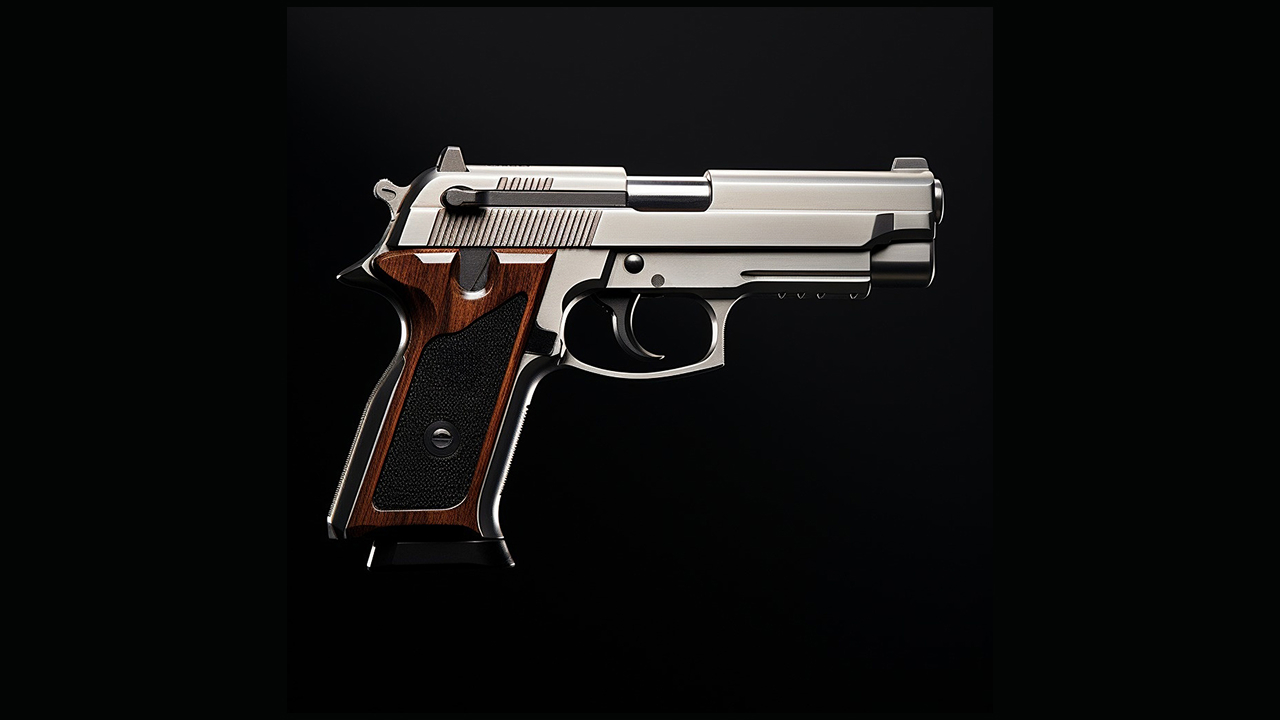
Glock pistols are among the most preferred semi-automatic pistols worldwide due to their simple designs and high reliability. So, exactly how does a Glock work? Here is a detailed explanation of Glock’s firing cycle, safety systems, and mechanical structure.
How Does the Glock Firing Mechanism Work?
When the trigger is pulled, the trigger bar draws the firing pin backward. The connector guides the trigger bar downward and releases the firing pin at a specific point. The released firing pin strikes the primer of the cartridge.
Expanding gases created by the burning gunpowder push the bullet forward along the barrel, and the bullet exits the barrel.
Recoil and Case Ejection
The recoil force generated after firing pushes the slide backward. During this movement, the barrel tilts slightly downward to unlock. At the same time, the extractor pulls the empty casing from the chamber.
When the casing is completely extracted, it contacts the ejector and is forcefully thrown out of the pistol.
Chambering a New Round
As the slide moves forward again, the pickup rail on the slide strips a new cartridge from the magazine. This cartridge is pushed up the feed ramp and into the chamber. With this stage, the firing cycle is complete, and the Glock is ready for the next shot.
Resetting the Trigger Mechanism (Reset)
While the slide moves back, the hook on the connector is pushed inward. This allows the trigger bar to move upward. When the slide comes forward again, the trigger bar can re-engage the firing pin.
When the trigger is released, the connector returns to its original position, allowing the trigger bar to move downward again. Thus, the system is reset for the next shot.
Glock’s Triple Safety System
Glock pistols do not feature an external safety lever. Instead, there are three automatic safety systems:
1. Trigger Safety
Unless the safety lever on the trigger is depressed, the trigger cannot move backward. This prevents accidental trigger drops.
2. Firing Pin Safety
The firing pin cannot move forward unless it is pushed up by the trigger bar. This prevents firing in cases of drops or impacts.
3. Drop Safety
The trigger bar is held by the housing within the frame. The firing pin cannot be released unless the trigger is fully pulled.
Polygonal Rifling System in the Barrel
Glock barrels feature a special rifling structure on the inner surface called polygonal rifling. This structure ensures the bullet spins around its own axis. Thus, the bullet becomes more stable during flight, and accuracy increases.
Magazine and Slide Lock Mechanism
Cartridges are fed into the pistol thanks to the spring inside the magazine. When the last round is fired and the casing is ejected, the magazine follower pushes the slide lock up, and the slide locks in the open position. This visually informs the user that the magazine is empty.