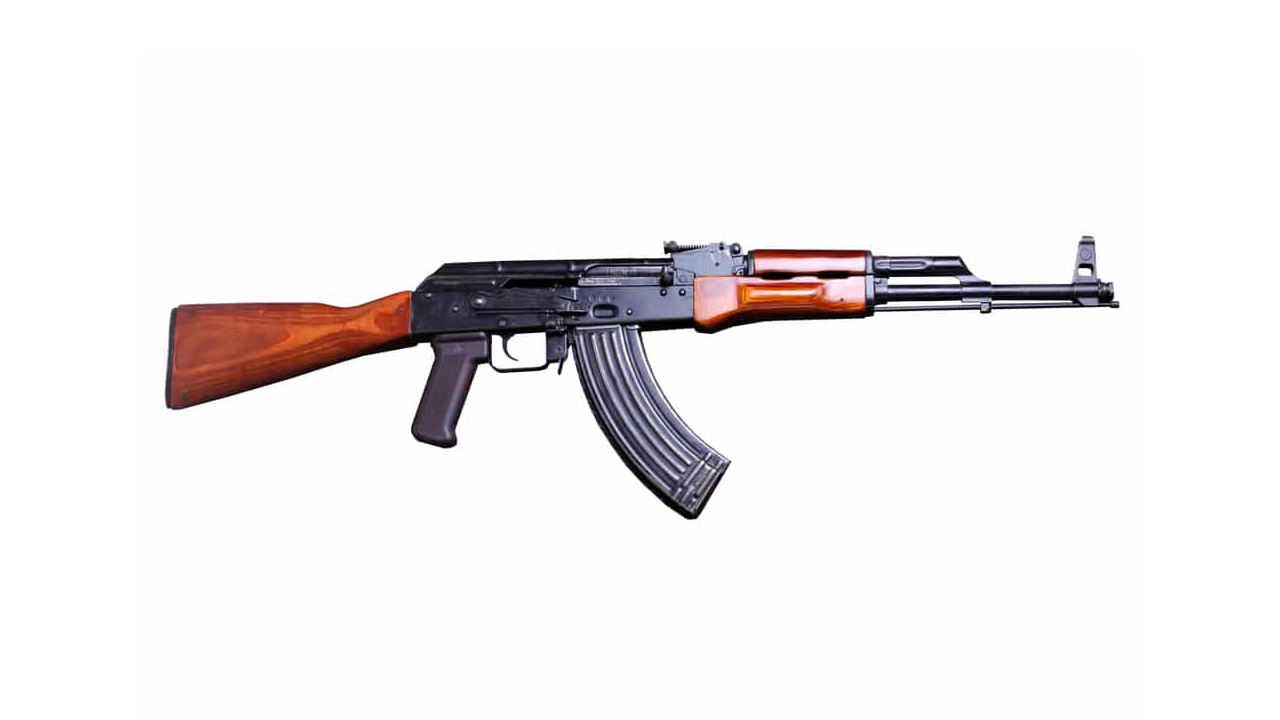
Although the AK-74 is often an overlooked and underappreciated rifle, it is currently positioned as perhaps one of the most important infantry weapons in the world. Despite this, when you say “AK-74” to someone without deep knowledge of firearms, they usually try to correct you by saying, “You mean AK-47.”
However, no; the AK-74 is a completely different weapon from the AK-47. It is practically the “little brother” of the AK-47, and the reversal of the numbers in their names is merely a coincidence.
In this article, we will get to know the AK-74 better and examine why we encounter it in almost every major conflict today and why it sits at the center of modern warfare.
World War II and the Modern Infantry Problem
During World War II, the world’s armies shared a common problem: Too many weapons, too many missions, and too many different types of ammunition.
A typical infantry squad looked like this:
- One machine gunner
- An assistant carrying ammunition for him
- A squad leader and assistant (usually with submachine guns)
- The rest of the soldiers were riflemen
The heavy firepower was provided by the machine gun, while the other elements protected it. The system worked; but logically, it was a nightmare.
For example, in the German army:
- MG42 → 7.92 mm Mauser (belt-fed)
- MP40 → 9 mm Luger
- Kar98k → 7.92 mm Mauser (not magazines, but stripper clips)
Even weapons using the same ammunition were not compatible with each other. This created a massive supply problem for large armies.
The Solution: The Assault Rifle Concept
In 1943, the Germans found a radical solution to this problem: The Sturmgewehr (assault rifle). The newly developed StG 44 used a shortened 7.92 mm cartridge and:
- Was effective up to 400 meters
- Could fire in semi-automatic and fully automatic modes
- Had low recoil
- Could be produced cheaply and quickly because it was made from stamped sheet metal
This weapon combined the roles of the machine gun, submachine gun, and infantry rifle into a single body. The war was lost for the Germans, but this idea survived.
The Soviets and the Birth of the AK-47
The Soviets liked this concept very much and developed the 7.62×39 mm ammunition. First, the SKS rifle appeared on the stage; however, the Soviets wanted a select-fire weapon with a 30-round magazine.
At this point, Mikhail Kalashnikov took the stage.
A tanker who began working on weapon designs after being severely wounded in the war, Kalashnikov matured the project together with the talented engineer Yekaterina Moiseyeva. The resulting prototype left its competitors behind.
The Result:
- Works in mud, sand, water, and ice
- Extremely simple
- Minimum maintenance requirements
In 1947, the AK-47 was officially adopted.
Why Was the AK-74 Developed?
During the Vietnam War in the 1960s, the Soviets began to study the US’s new M16 rifle and 5.56×45 mm ammunition.
This ammunition:
- Was lighter
- Had low recoil
- Caused severe injuries by tumbling upon impact
Soviet analysis showed this: Wounding a soldier consumed more resources than killing one. Thereupon, the Soviets developed the 5.45×39 mm ammunition while preserving the AK platform.
Technical Advantages of the AK-74
Entering service in 1974, the AK-74 differed from the AK-47 in the following ways:
- Lighter and faster 5.45 mm bullet
- Polymer magazine
- Repositioned gas block
- An effective muzzle brake / compensator
Result: Almost non-existent recoil and high accuracy.
The AK-74 family expanded quickly:
- RPK-74: Light machine gun
- AKS-74: Model with a folding stock
- AKS-74U (Krinkov): Short-barreled compact version
Afghanistan and the “Poison Bullet” Legend
In 1979, the Soviets entered Afghanistan. The rugged terrain, high altitude, and guerrilla tactics wore down the Soviet army.
The 5.45 mm ammunition was called the “poison bullet” by Afghan fighters. The reason: It created slow and painful injuries rather than being instantly lethal.
The war was devastating for the Soviets, and they withdrew in 1989.
Post-Cold War and the Global Dominance of the AK-74
In 1991, the Soviet Union collapsed. Subsequently, regions like:
- The Caucasus
- The Balkans
- Eastern Europe
- Central Asia
…were filled with conflicts. In all of these conflicts, the familiar sound of the AK-74 was heard.
Modernization: AK-100 and AK-12
In the 1990s, the AK-100 series was developed based on the AK-74M. The Goal:
- Parts commonality
- Lower production costs
In 2012, the AK-12 was introduced. However, it received mixed reactions on the front line due to problems such as:
- High cost
- Quality issues
- Optics rails not holding zero
Today, many soldiers still prefer the classic AK-74.
Conclusion: The Weapon of the 21st Century
The AK-74 may not be the most important weapon of the 20th century; however, it is indisputably one of the most decisive infantry rifles of the 21st century.
Combining the durability of the East with the ammunition philosophy of the West, this rifle continues to fight for both the East and the West today.
And it seems that it will not fall off the agenda for many years to come.