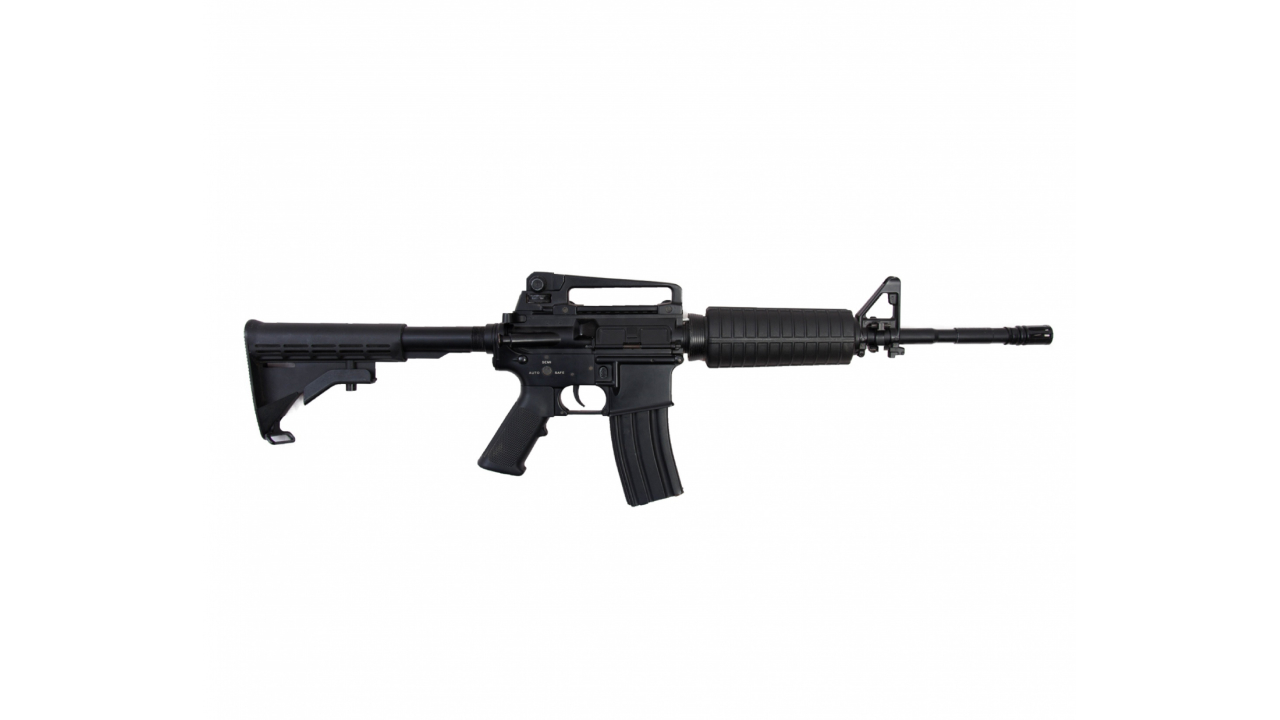
Submachine guns (SMGs) are considered one of the most iconic and “cool” classes in firearm history. Although etched in memory with twin Uzis or MP5s in cinema and pop culture, it appears that these weapons have almost completely disappeared from modern military inventories. So, why were submachine guns, which were used by almost everyone in World War II, removed from military doctrines today?
The answer to this question basically gathers under two main headings; the development of rifle technology and the proliferation of modern body armor.
The Rise of Submachine Guns During the World War II Era
During World War II, submachine guns were indispensable for armies. The Germans used the MP40, the British the Sten, the Soviets the PPSh-41, and the Americans used the Thompson and later the M3 Grease Gun. These weapons stood out in urban combat with their high fire rates and ease of use at close range.
At that time, most infantry were equipped with long, heavy rifles using full-power and high-recoil ammunition like the .30-06 or 7.92 Mauser. Submachine guns offered a more compact and rapid-fire alternative compared to these weapons.
Reason 1: Rifle Technology Catching Up to Submachine Guns
Towards the end of the war, military doctrines began to change. Armies moved away from full-power rifle cartridges and turned towards the intermediate cartridge concept. The most important examples of this were the 7.62×39 mm ammunition and the AK-47, followed by the 5.56 NATO and the M16.
With this transformation, soldiers obtained lighter weapons, more controllable recoil, and fire rates close to submachine guns, but with much longer range and stopping power.
Consequently, assault rifles, which combined rifle power with submachine gun fire rates, largely eliminated the need for automatic weapons using pistol cartridges.
Reason 2: The Proliferation of Body Armor
During World War II, infantry used almost no body armor. Therefore, pistol ammunition like 9 mm could be lethal even at a distance of 50 meters.
However, by the 1980s, Kevlar and flak jackets became standard for soldiers. Although these armors were not initially designed to directly stop pistol bullets, they could significantly reduce the bullet’s speed. Especially after the bullet passed through an obstacle, its effect could be further diminished.
By the time of the 1993 Battle of Mogadishu, U.S. Army troops were using body armor capable of stopping even rifle rounds. From this point on, submachine guns using pistol cartridges turned into a serious disadvantage for the modern infantryman.
Conclusion: Nostalgia Exists, Military Need Does Not
Submachine guns still possess a great aesthetic, historical, and cultural appeal. However, factors such as the versatility of assault rifles, advanced ammunition, and widespread body armor have caused this weapon class to fall behind in a military sense on the modern battlefield.
Today, submachine guns are mostly associated with special missions and limited use cases, having long lost their role as a main battle weapon.