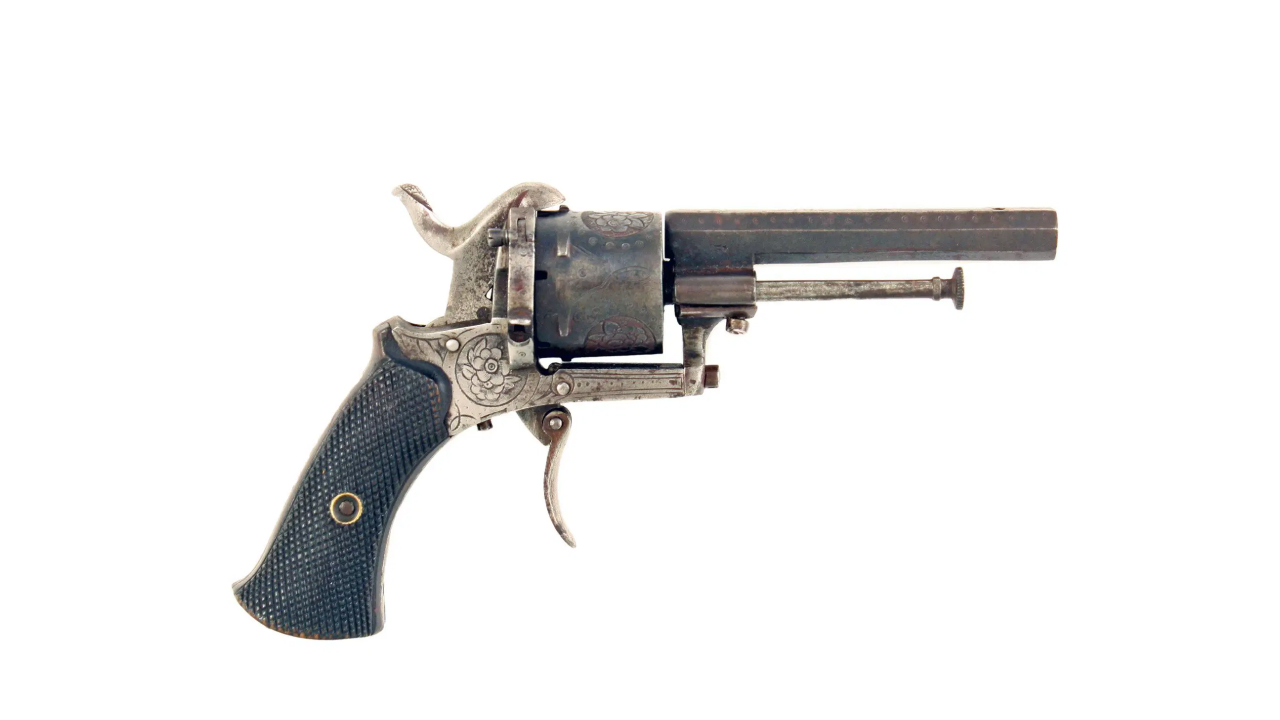
The world of firearms often features specific technical details that carry deep historical significance. For enthusiasts of vintage revolvers, the concepts of pinned barrels and recessed chambers are more than just design choices; they represent a specific era of craftsmanship. Understanding these features helps in distinguishing between classic models and modern production standards.
Mechanics of Pin barrel systems
The term pin barrel refers to a construction method where the barrel is secured to the frame using a small pin to prevent it from loosening. In this traditional production technique, the barrel is first tightly screwed into the frame. Subsequently, a hole is drilled through the assembly, and a locking pin is inserted to ensure the barrel remains perfectly stationary and does not rotate over time.
Design of Recessed chambers
Another distinctive feature often found in classic revolvers is recessed chambers, also known as countersunk chambers. In this design, the rim of the cartridge sits flush within a groove inside the cylinder. This creates a visible difference compared to many modern revolvers, where the chambers are flat and the cartridge rims sit on top of the cylinder face rather than being embedded within it.
Evolution of Revolver manufacturing
The transition from classic to modern designs brought several changes in how revolvers are built. These shifts were primarily driven by advancements in production techniques and cost optimization.
Features of Classic revolver models
- Pin barrel: Secured with a physical pin.
- Recessed chambers: Cartridges are countersunk into the cylinder.
- One-piece barrel: Constructed from a single piece of steel.
- No key lock: Lacks internal safety locking mechanisms.
Characteristics of Modern revolver models
- Pinned-less barrels: Secured using modern threading and tension without a pin.
- Non-recessed chambers: Flat cylinder faces for easier manufacturing.
- Sleeve barrel structures: Some models use a two-part shroud and liner system.
- Internal key locks: Many newer models include integrated safety locks.
Necessity of Pin barrel in modern firearms
While the original purpose of the pinned barrel was to prevent loosening, improved manufacturing tolerances have made this requirement largely obsolete. Observations and experiences in the field show that:
- Barrels remain perfectly secure even without the use of a pin.
- Modern production techniques have solved the loosening issues of the past.
- There is no significant difference in performance during active use.
As a result, most major manufacturers moved away from this method starting in the 1980s.
Performance and Accuracy comparison
When it comes to actual range performance, there is no evidence to suggest that one system is superior to the other. Testing shows that both pinned and non-pinned revolvers:
- Hit the same targets with similar accuracy rates.
- Provide an identical feel during operation.
- Maintain consistent reliability across various shooting conditions.
Therefore, a pin barrel is not a factor that directly determines the shooting performance or accuracy of a firearm.
Collectible value and Nostalgia
Today, the preference for a pinned barrel is based on nostalgic and collectible value rather than technical necessity. For vintage revolver enthusiasts, these features serve as:
- An indicator of a vintage firearm.
- A symbol of high-quality old-world craftsmanship.
- A detail that significantly increases the value of a collection.
Similarly, while recessed chambers were originally intended to support more powerful ammunition, modern metallurgy has proven they are not essential for safety or performance. Many modern manufacturers have successfully moved to flat-faced cylinders without any loss in functional quality.