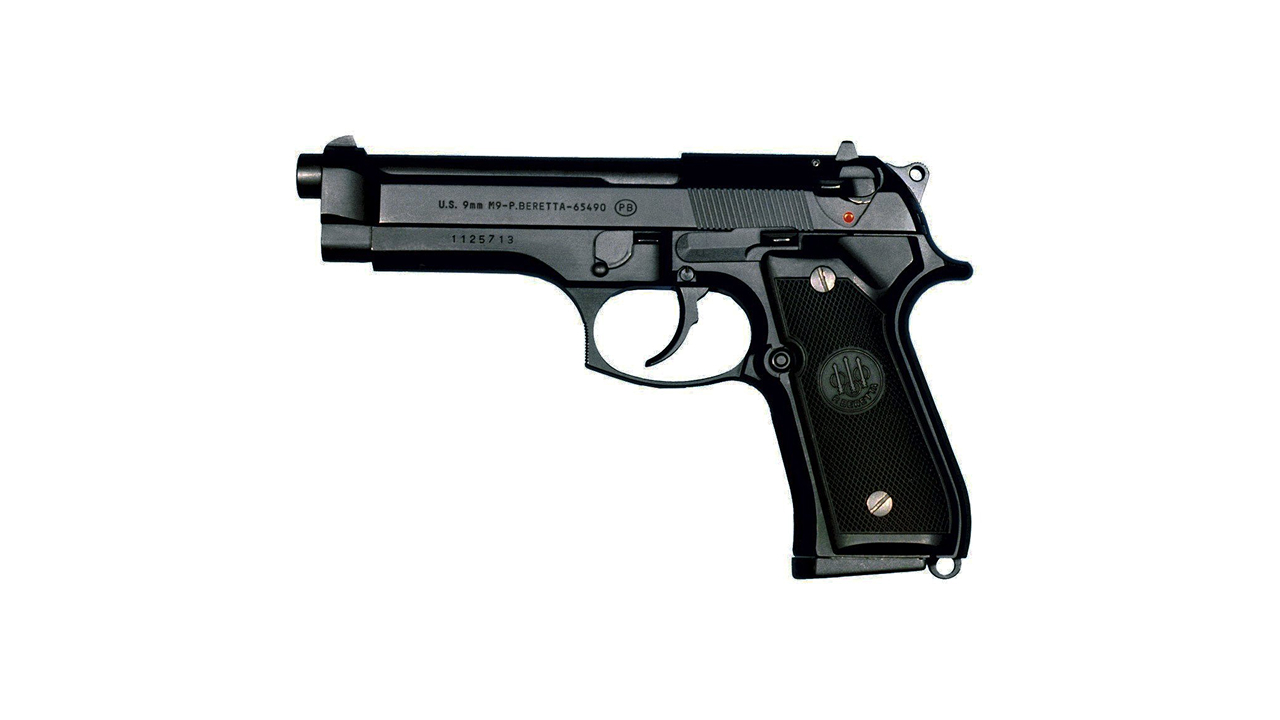
Beretta is one of the oldest continuously operating gun manufacturers in the world. The company’s first known record dates back to 1526. On this date, Beretta sold 185 arquebus (early firearm) barrels to the Republic of Venice. This sale is recorded in the Venice Arsenal archives and documents Beretta’s deep-rooted history in arms manufacturing.
Since then, Beretta has continued to produce barrels, gun parts, and complete firearms for nearly 500 years.
Beretta’s Founding and Early Years
The foundations of the company were laid by Pietro Beretta, and the firm operated for many years under the name “Fabbrica d’Armi Pietro Beretta.” In the early periods, Beretta produced only barrels and gun components.
However, in the mid-19th century, Pietro’s son Giuseppe Beretta made a significant decision that changed the company’s direction: switching to complete weapon production.
By 1860, Beretta was producing approximately 300 guns per year. This period symbolized Beretta’s transformation from a small workshop into a true arms manufacturer.
20th Century and Transformation into an International Brand
Pietro Beretta, Giuseppe’s son who took over the company in the early 1900s, was the figure who grew the brand on an international scale. Under his leadership, Beretta became a recognized brand outside of Europe, significantly increased its production capacity, and turned towards innovative designs while preserving traditional lines.
Beretta continued to produce hammer guns until the 1970s. Even pinfire system guns were included in the catalog until 1938. This situation clearly showed the importance Beretta placed on tradition rather than fashion.
Browning Competition and the Birth of the SO (Sovrapposto) Series
In the mid-20th century, Beretta’s biggest competitor was Browning. The Superposed released by Browning became one of the first commercially successful over-under shotguns.
Wanting to respond to this competition, Beretta collaborated with the legendary gun designer Tullio Marangoni. Their goal was to produce rifles that were lower profile, elegant, and mechanically efficient.
Result: The SO (Sovrapposto) series.
Technical Innovations of the SO Series
Unlike Browning designs, the Beretta SO series used two trunnions instead of a traditional hinge pin, preferred a horizontal locking bolt passing through the rear instead of an under-lug, and developed a side-lock system that locked the barrel and receiver from the sides.
Thanks to this design, the gun’s receiver became thinner, and the entire gun became lighter and better.
This basic design continued to be used in high-end Beretta models such as the DT10, DT11, and ASE.
Monobloc Barrel: Beretta’s Contribution to the Industry
One of the most important innovations Beretta introduced to the sector was the monobloc barrel system.
In this system, the barrel block is produced as a single piece. Two barrel tubes are placed into this block and joined using welding and soldering processes.
With this method, production accelerated, the durability of the gun increased, and it became a standard used by almost all manufacturers today.
Beretta’s 400+ years of barrel production experience clearly shows why they are pioneers in this field.
Evolution of the SO Series and Models
The first model produced was retroactively named SO1. Subsequently, models appealing to different segments were developed, such as:
- SO2
- SO3
- SO4
- SO5
- SO9
Specifically:
- SO4 (1968) → The most common and relatively accessible model.
- SO5 (1989 – present) → High-end, labor-intensive craftsmanship, and quite expensive.
The SO series is still considered Beretta’s flagship today.
More Accessible Models: S56, S57, and S58
Beretta did not produce only elite weapons. They also developed models appealing to broader audiences:
- S56
- S57
- S58
These models increased Beretta’s popularity by being:
- Reliable
- Lightweight
- Relatively affordable
In particular, the S56 formed the foundation of the 680 action, which would later become legendary.
The 680 Series and the Birth of Modern Beretta
The series that ensured Beretta’s rise in the 1980s and 90s was the 680 platform.
Models born from this platform:
- 682
- 686
- Silver Pigeon
- Gold series
These guns gained a reputation for being durable, having interchangeable parts, and being long-lasting.
Even today, a Beretta 686 is seen as a shotgun that can serve its owner and even future generations.
Old Beretta or New Beretta?
This question is asked frequently. The answer is not clear-cut.
Old Berettas have more hand craftsmanship, a more romantic character, and a more “soulful” feel.
New Berettas, thanks to CNC and CAD, have perfect tolerances, more consistent quality, and less human error. Technically, modern Berettas are not of lower quality, they are just less romantic.
Beretta’s Present and Future
Beretta is a giant holding company today. Among the brands it owns are important names such as:
- Benelli
- Franchi
- Stoeger
- Burris
- Steiner
Although prices have increased, Beretta still produces weapons that are reliable, long-lasting, and retain their value.