How far an object travels depends on how hard you throw it, its shape, and its mass. This applies to cricket balls, crumpled paper, and of course, bullets.
How Does a Gun Accelerate a Bullet?
When a gun is fired, a small explosive charge behind the bullet is triggered. The expanding gas cloud resulting from this explosion pushes the bullet down the barrel. The bullet continuously accelerates until it leaves the barrel. After exiting the muzzle, it is on its own; fighting against air resistance and gravity.
The stronger the explosion, the faster the bullet. Also, if the explosive charge is large enough, the longer the barrel, the longer the bullet can accelerate. Therefore, long-barreled guns generally reach higher speeds.
The speed of the bullet at the moment it leaves the barrel is called muzzle velocity and is usually measured in meters/second (m/s).
Muzzle Velocities of Different Guns
18th Century Dueling Pistol:
Fires a 13 mm diameter lead ball at approximately 120 m/s (about 430 km/h).
Winchester Swift Hunting Rifle:
Fires a 5.6 mm diameter bullet at 1,253 m/s (about 4,510 km/h). This bullet covers 100 meters in 0.08 seconds.
AK-47:
Has a muzzle velocity of approximately 715 m/s.
Fastest Cricket Pitch:
44.8 m/s (161.5 km/h).
These comparisons clearly show how high speeds modern firearms reach compared to objects thrown by human power.
How Far Do Bullets Go?
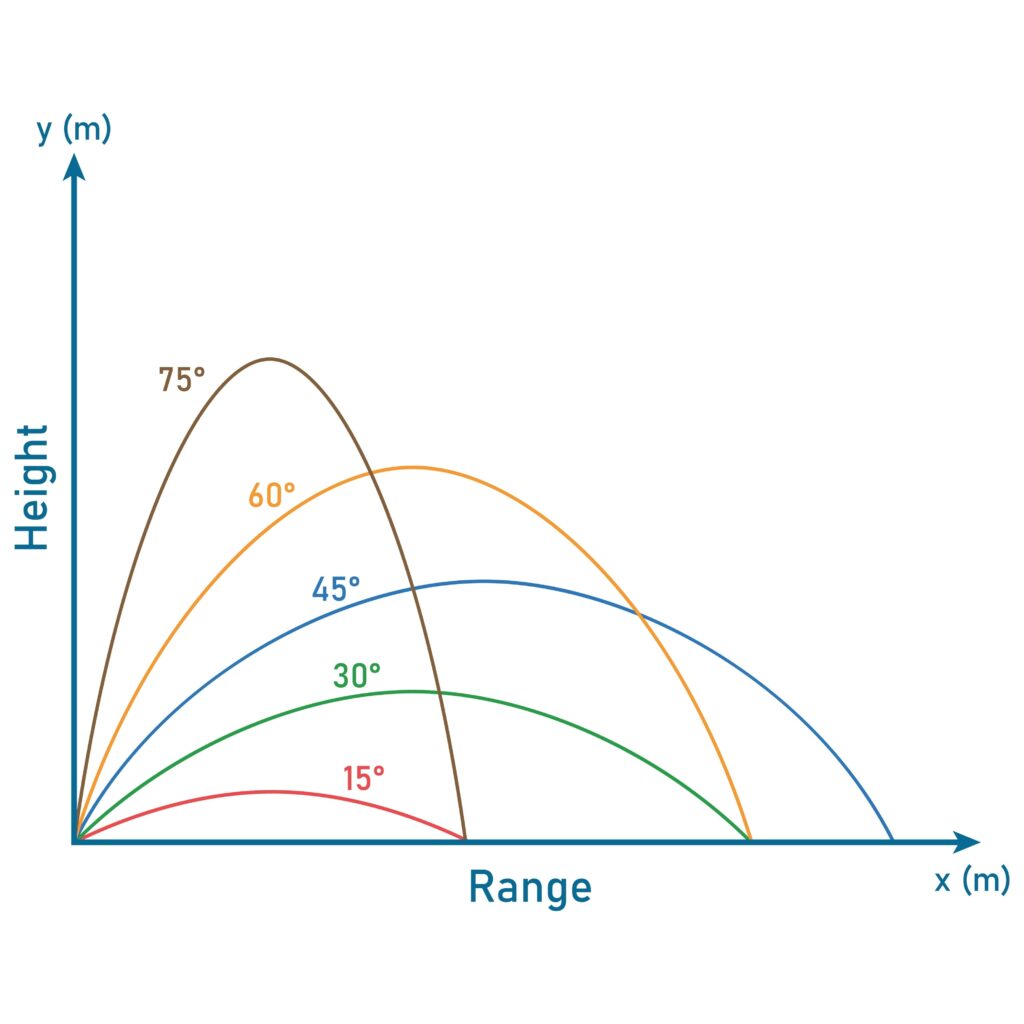
How far a bullet will travel is a much more complex issue than just speed. Gun experts use the concept of effective range here. Effective range refers to the maximum distance at which the bullet can be accurate and damaging on the target.
For example, if you throw a marble and a ping pong ball with the same force, the marble goes further. This is because the marble is heavier, carries more momentum, and is more resistant to air resistance. The same principle applies to bullets.
The Relationship Between Weight and Range
A Modern Shotgun:
Has a muzzle velocity of approximately 400 m/s. However, because it uses many small and light pellets, its effective range is usually around 50 meters.
Napoleonic Era Musket:
Although it has about half the muzzle velocity of the shotgun, it has about three times the effective range because it fires a single, heavy lead ball.
The Real Limit: Shooter’s Skill
Even with the most powerful and precise rifles, the effective range is ultimately limited by the shooter’s skill. It is extremely difficult to consistently and accurately hit a target at a distance of over 400 meters.
Despite this, a standard 9 mm pistol, when fired at a proper elevation angle, can send its bullet more than 2 kilometers away. Even at this distance, the bullet still moves at a speed of over 100 m/s.